.png)

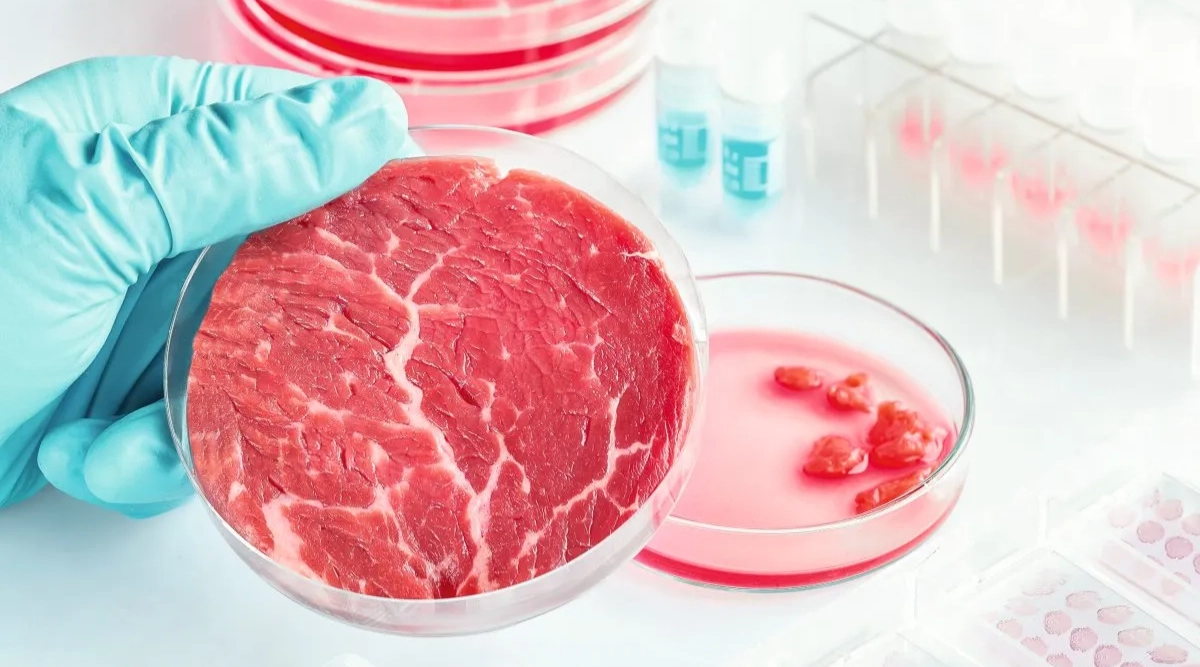
Table of contents
- What is cultivated meat, and what do people mean by "lab-grown"?
- Why the climate maths depends on electricity, not just cows
- Land and biodiversity: does less livestock actually free nature?
- Water and local pollution: manure is not the only story
- Nutrition and processing: "real meat" does not guarantee the same health effects
- Food safety and antibiotics: fewer old hazards, different new ones
- Scale and price: the bottleneck is not taste, it is throughput
- Animal welfare and ethics: the clear wins and the awkward details
- Regulation and labelling: how products get onto shelves
- A practical verdict: when cultivated meat is the better choice, and when it is not
What is cultivated meat, and what do people mean by "lab-grown"?
Cultivated meat is animal tissue grown from animal cells in controlled tanks, not from a slaughtered animal. If you have ever looked at a chicken nugget and thought “this is more processing than farm”, you are not wrong, but processing is not the same thing as danger. Expectation vs reality: “grown in a lab” sounds alien, yet the basic idea is familiar to medicine and food manufacturing, while the hard part is scaling it safely and cheaply.
In practice, this means: cultivated meat is best understood as a manufacturing process for producing animal protein, not a new species of food with guaranteed health or climate benefits.
The core steps are straightforward on paper:
- A starter cell line is taken from an animal (or derived from a bank of cells already in storage).
- Cells grow in a nutrient solution in a bioreactor, under tight control of temperature, oxygen, acidity, and mixing.
- Cells are guided to form muscle and fat tissue, then harvested.
- The harvested material is shaped into a product (often minced-style products first, because whole cuts are technically harder).
Terms get mixed up in everyday coverage, so it helps to keep the categories clean:
- Cultivated meat: grown from animal cells.
- Plant-based meat: made from plant proteins and fats, with meat-like structure and flavour.
- Precision fermentation: microbes produce specific proteins or fats (for example, a dairy protein), which can be used as ingredients.
Why the climate maths depends on electricity, not just cows
The climate impact of cultivated meat is driven less by “no methane” and more by “how much energy and upstream manufacturing it needs”. The expectation is simple: remove livestock, cut emissions. The reality is that some scenarios look better than conventional meat, while others look worse, because energy and input production can dominate the footprint.
In practice, this means: cultivated meat is not automatically low-carbon; its climate performance rises or falls with the electricity grid, the growth medium, and how efficiently a facility runs at scale.
Most comparisons use life cycle assessment, which is a structured way of adding up impacts from inputs (like nutrients, equipment, and electricity) through to a product leaving the factory gate. The problem is not the method; the problem is that today’s cultivated meat is not yet produced at the scale assumed in many models, so results depend heavily on assumptions.
Three topic-specific reasons the numbers swing so widely:
- Energy intensity: heating, cooling, stirring, aerating, cleaning, and sterile operations can be electricity-heavy, and the grid mix matters.
- Growth medium supply chain: if the nutrient mix relies on highly refined ingredients, their production can carry a large footprint before the bioreactor even starts.
- System boundaries and “what is replaced”: replacing beef, chicken, or processed meat changes the comparison; so does whether you include capital equipment and waste treatment.
A second, easy-to-miss wrinkle is time. Ruminant methane is potent but short-lived compared with carbon dioxide, so “better for climate” depends on time horizon and what exactly is being displaced. That does not make livestock “fine”; it just means comparisons need to be explicit about what they count.
What to look for when someone claims a climate win:
- Which meat is the baseline (beef, pork, chicken, or an average)?
- What electricity mix is assumed now, and what is assumed in the future?
- Are the biggest drivers the bioreactor energy, the growth medium, or both?
- Does the model reflect a plausible industrial facility, or a small pilot process scaled up on paper?
Land and biodiversity: does less livestock actually free nature?
Land is where cultivated meat has the clearest theoretical advantage, because livestock uses land directly and indirectly through feed crops. The expectation is that less pasture and less feed means more room for forests, wetlands, and wildlife. The reality is that land is only “freed” if demand shifts and policy prevents that land from simply being repurposed into other high-impact uses.
In practice, this means: the land benefit is real in principle, but it only becomes a biodiversity benefit if land is protected or restored rather than reallocated.
Two points often get blurred in public debate. First, different meats have very different land footprints, with beef typically the outlier. Second, land is not just “space”; it is an ecosystem with carbon storage, water regulation, and habitat value, which can be gained or lost depending on what happens after livestock pressure declines.
Conditions that make “land-sparing” more than a slogan:
- Cultivated meat actually displaces higher-impact livestock production, rather than adding a new layer of consumption.
- Feed demand falls in a way that reduces pressure for land conversion, not just shifts the crops elsewhere.
- Freed land is managed for restoration, rewilding, or low-impact uses, rather than short-term extraction.
There is also a trade-off worth stating plainly: some low-carbon electricity sources and infrastructure also use land and materials. A future in which cultivated meat runs on clean power is the attractive scenario, but it is not free of land and resource decisions.
Water and local pollution: manure is not the only story
Many people first think of water as “how many litres per burger”, but local pollution is often the sharper issue. The expectation is that removing animals removes pollution. The reality is that cultivated meat can reduce manure-linked problems, yet it introduces industrial wastewater, cleaning chemicals, and upstream impacts from producing nutrients and materials.
In practice, this means: cultivated meat is likely to reduce some farm-based pollution pressures, while shifting attention to factory-based controls and supply chains.
Livestock systems can drive nutrient runoff (nitrogen and phosphorus), ammonia emissions, and pathogen spread through manure management. Cultivated meat avoids manure entirely, which matters for local air and water quality in intensive animal regions. At the same time, bioreactors require sterile or near-sterile operations, which rely on frequent cleaning and careful waste handling.
Environmental questions that deserve more than a headline:
- Where do the nutrients come from, and how resource-intensive is their production?
- How is wastewater treated, and what are the main contaminants of concern?
- How often does equipment need deep cleaning, and what does that involve?
- How does waste compare with slaughterhouse waste streams in volume and hazard?
Nutrition and processing: "real meat" does not guarantee the same health effects
Cultivated meat aims to replicate animal tissue, but nutritional equivalence is not automatic. The expectation is “it is meat, so it is nutritionally identical”. The reality is that prototypes vary, and the final nutritional profile depends on cell type, fat composition, processing, and what is added after harvest.
In practice, this means: treat cultivated meat like any other packaged food and read what it actually contains, rather than assuming “natural meat” rules apply.
Meat contributes high-quality protein and, depending on the cut, meaningful amounts of iron, zinc, vitamin B12, and other micronutrients. Cultivated meat could in principle be designed with different fat profiles or fortified nutrients, but that depends on the manufacturer’s choices and on regulatory acceptance of those formulations.
A more practical health lens is “what product format is it?”. If cultivated meat enters the market mainly as burgers, nuggets, and sausages, then processing, salt, and fat content can matter at least as much as the cell origin.
Questions that help you judge the nutrition claim without guesswork:
- Is it whole-muscle style or minced and reformulated?
- What is the saturated fat and salt content compared with conventional equivalents?
- Does it provide iron and vitamin B12 in meaningful amounts, or is it closer to a protein-and-fat base?
- Are there added binders, flavourings, or oils that change the nutritional balance?

Food safety and antibiotics: fewer old hazards, different new ones
Cultivated meat can avoid some slaughter-associated contamination routes, but it creates a different safety profile. The expectation is “factory food is safer” or, conversely, “lab food is risky”. The reality is that food safety is a systems problem: hazards shift, and control points move upstream.
In practice, this means: the safety question is less about the idea of cultured cells and more about how well a facility controls contamination, residues, and traceability.
Without intestines, hides, and slaughter lines, certain contamination pathways linked to conventional meat can be reduced. But cell culture is vulnerable to contamination by microbes that thrive in nutrient-rich environments, and sterile process discipline becomes central. Regulators and scientific assessments focus on hazards across the production chain, from cell sourcing through harvesting and processing.
Safety points that are specific to cultivated meat manufacturing:
- Microbial contamination risks in cell growth steps, including hard-to-detect contaminants in cell culture systems.
- Chemical residues from processing aids, cleaning agents, or scaffold materials used to structure the tissue.
- Allergen introduction from new ingredients used in media, scaffolds, or final formulation.
- Consistency and genetic stability of cell lines over time, which matters for predictable composition and quality control.
Antibiotics are a flashpoint. Cell culture in other industries has sometimes used antibiotics to control contamination, but food production has strong reasons to minimise that approach. The more robust solution is preventive process control: clean inputs, monitored systems, validated cleaning, and rapid detection.
Scale and price: the bottleneck is not taste, it is throughput
Meaningful environmental impact requires scale, and scale is where most promises currently break. The expectation is that one approval means quick supermarket takeover. The reality is that going from pilot batches to continuous, affordable production is a factory challenge: large vessels, reliable inputs, tight quality control, and predictable costs.
In practice, this means: near-term cultivated meat will have limited availability and uncertain footprint, while long-term impact depends on industrial learning curves and clean energy.
The toughest constraints are not mysterious:
- Capital intensity: building food-grade bioreactor facilities is expensive.
- Operating costs: energy, media ingredients, and cleaning cycles can dominate.
- Yield and reliability: contamination events, downtime, and batch failures matter at scale.
- Supply chains: large volumes of consistent inputs must be available without simply moving impacts upstream.
A useful reality check is displacement. Even a successful premium product does little for climate if it mainly adds a new category of consumption. The environmental upside appears only if it replaces a meaningful share of high-impact animal meat, especially in product segments where livestock impacts are largest.
Animal welfare and ethics: the clear wins and the awkward details
The strongest straightforward argument for cultivated meat is reduced reliance on slaughter and intensive farming. The expectation is “no animals harmed”. The reality is that animals can still be involved in cell sourcing and, depending on the process, some inputs historically came from animal-derived materials, even if the industry is moving away from them.
In practice, this means: cultivated meat can reduce animal suffering substantially, but the ethical “clean break” depends on how cell lines and inputs are handled.
Ethical questions people often care about, and why they are not all identical:
- Cell sourcing: how initial cells are obtained, and whether ongoing sourcing is needed.
- Animal-derived inputs: whether the growth medium and processing aids are animal-free.
- Transparency: whether companies disclose these details clearly, not buried in technical language.
- Wider impacts: what happens to farmers and rural communities if production shifts from farms to factories.
For some consumers, religious and cultural considerations also matter, and these typically hinge on definitions of origin, process, and oversight rather than on the final protein alone.
Regulation and labelling: how products get onto shelves
Market access depends on safety assessment, manufacturing controls, and labelling rules, not on marketing claims. The expectation is that regulation is either a rubber stamp or a political barrier. The reality is that most jurisdictions treat cultivated meat as a novel food category, which requires evidence on production, composition, contaminants, and stability.
In practice, this means: if a cultivated meat product is legally sold in a country, it has passed a defined safety review process, but that does not answer the environmental question on its own.
Regulatory structures vary. In the United States, oversight is shared between the FDA and the USDA for meat and poultry, with a handover point during production. In the European Union, cultivated meat falls under the novel food framework, with EFSA involved in safety assessment and an EU authorisation decision needed before sale. Switzerland aligns novel food market access with its own authorisation approach, recognising EU authorisations in specific ways.
What regulators generally require, in plain terms:
- A clear description of the production process and all inputs.
- Evidence that the product is safe at intended consumption levels.
- Controls for contamination, residues, and allergens.
- Labelling that does not mislead consumers about what the product is.
Labelling debates often focus on words like “meat”, but for consumers the practical question is simpler: can you understand what it is, how it was made, and what it contains?
A practical verdict: when cultivated meat is the better choice, and when it is not
Cultivated meat can be better for the environment and still not be a clear win in every real-world version sold today. The expectation is a single verdict: good or bad. The reality is a decision tree: compared with what, produced how, powered by what, and eaten in what form?
In practice, this means: if your main goal is lower impact right now, the safest bet remains reducing high-impact meats and choosing lower-impact proteins, while treating cultivated meat as a promising but still variable option.
Four stories that tend to be wrong
- “No cows means low emissions.” Electricity, media production, and factory efficiency can outweigh the methane advantage.
- “One footprint number settles it.” Published models differ because assumptions differ, and early industrial data remain limited.
- “It is healthier because it is cleaner.” Health depends on formulation, salt, fat profile, and how often it replaces ultra-processed meat.
- “It will replace livestock quickly.” Scaling factories and inputs takes time, and displacement is not automatic.
If cultivated meat is available where you live, these checks help you make a grounded choice:
- Prefer products with transparent information on energy use and manufacturing controls, not just broad sustainability claims.
- Compare it to the specific conventional product it replaces (beef burger versus chicken breast is not the same comparison).
- Look at nutrition like you would for any packaged food: salt, saturated fat, and portion size.
- Treat “animal-free” claims as something to verify in how the product is produced, not just in how it is eaten.
For many people, the most honest summary is this: cultivated meat is a credible tool that could cut land pressure and, under the right energy and input conditions, reduce climate and pollution impacts. Whether it is already the “better alternative” depends on how it is made, how clean the power is, and what it actually replaces.