.png)

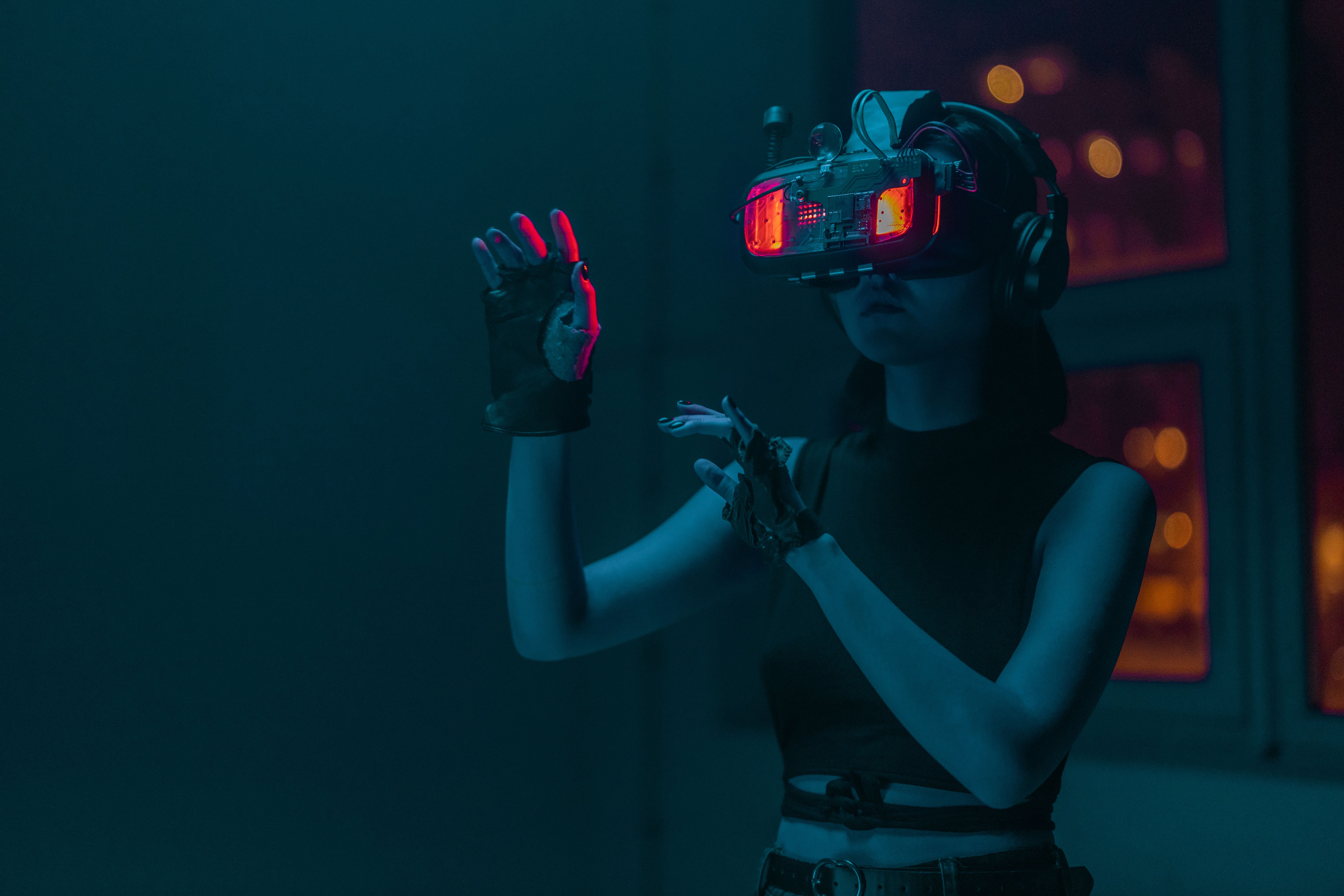
Table of contents
- What counts as metaverse training, and what is just exercise with a headset?
- Why the body still follows old rules: effort, time and load
- When a game becomes real exercise
- Why VR can feel easier, harder or simply different
- What the evidence says so far, and what it does not yet prove
- Where VR training fits in a normal week
- The traps: calorie numbers, streaks and invisible overuse
- Who should be more careful before using a headset for workouts
- So, is the metaverse a fitness game-changer?
What counts as metaverse training, and what is just exercise with a headset?
A person punching targets in a headset is not automatically training in the metaverse. Most fitness products sold today are better described as immersive VR exercise: movement guided by a headset, controllers, sensors and a digital environment.
The expectation is a new fitness universe. The reality is narrower. The current evidence mostly tests VR exercise games, not a fully persistent social metaverse where people train, compete, recover and receive coaching across connected virtual worlds.
For normal readers, the useful distinction is simple: VR fitness is the tool you use today; the metaverse is the larger digital layer that companies are still trying to build around it.
A VR workout can include several elements:
- a headset that creates a 3D visual world
- hand controllers or hand tracking
- game-like tasks such as boxing, dodging, slicing or squatting
- avatars, scores, leaderboards or coaching prompts
- optional social features such as group classes or shared rooms
This matters because each part can affect the workout differently. The headset changes attention. The game changes motivation. The movement pattern changes training load. Social features may change accountability. None of these automatically turns the session into good training.
The strongest version of metaverse fitness is not "fitness in a cartoon world". It is structured exercise made more engaging through feedback, immersion and social design. In practice, the question is not whether the world looks futuristic. The question is whether the session gives your body a useful stimulus and whether you come back often enough.
Why the body still follows old rules: effort, time and load
Your heart, lungs, muscles and tendons do not care whether a squat happens in a gym or in a virtual arena. They respond to effort, duration, frequency, recovery and progression.
The expectation is that technology changes the rules. The reality is that it changes the wrapper. A VR game can make effort more attractive, but it cannot replace the basic biology of adaptation.
For cardiovascular fitness, the key issue is whether the session raises breathing and heart rate enough, for long enough, often enough. For strength, the issue is whether muscles work against enough resistance or bodyweight challenge. For mobility and balance, the issue is whether joints, coordination and control are trained through useful ranges.
VR fitness can support some of these goals well. It is often strong for movement volume, rhythm, coordination and repeated moderate-to-vigorous effort. It is usually weaker for heavy resistance training unless external weights, bands or machines are deliberately added.
A practical way to judge a VR workout is to ask:
- Do I breathe harder than at rest?
- Can I still speak in short sentences?
- Do my legs, shoulders or trunk actually work?
- Does the session last long enough to matter?
- Can I repeat it without pain or dizziness?
- Does it complement, rather than replace, strength work?
Public health guidance for adults still centres on regular aerobic activity plus muscle-strengthening activity. VR can contribute to the aerobic part when the game is active enough. It does not automatically cover strength, bone loading, sprint capacity or sport-specific skill.
This is where the metaverse story becomes more grounded. A good VR fitness session is not magic. It is exercise that happens to be disguised as play.
When a game becomes real exercise
Some VR games are closer to light movement breaks. Others can reach moderate or vigorous intensity, especially boxing, rhythm, squat-heavy and full-body games.
The expectation is that all active games count as workouts. The reality is game-dependent. Two people can spend the same 20 minutes in VR and get very different training loads because difficulty, movement range and effort vary so much.
A game becomes meaningful exercise when it produces a measurable physical demand. Heart rate, breathing, muscle fatigue and repeated movement all matter. Energy expenditure is often described through METs, a unit that estimates how much energy an activity uses compared with rest. In plain English: it tells you whether the body is cruising, working or working hard.
The best evidence for intensity comes from direct measurement, not from how sweaty the session feels. Indirect calorimetry, which measures oxygen use, is more reliable than consumer calorie estimates. In practice, this means a lab mask is better than a wristwatch for judging energy burn, but most people will never train with one.
VR exercise intensity depends on several things:
- game type: boxing and squat games usually demand more than slow exploration
- difficulty level: harder levels can raise heart rate without feeling much harder
- movement honesty: small wrist flicks reduce the training effect
- session length: five intense minutes do not equal a full workout
- player skill: experienced players may move more efficiently
- available space: cramped rooms can limit full-body movement
This makes VR fitness both promising and messy. It can turn exercise into something people enjoy. It can also let people cheat the movement without realising it. A boxing game done with full footwork, trunk rotation and controlled breathing is not the same as tapping targets from the elbows.
For normal use, the answer is practical: choose games that make your whole body move, increase difficulty gradually and judge the session by breathing, heart rate and repeatability, not only by the score.
Why VR can feel easier, harder or simply different
Many people notice the strange part first: they work hard in VR but feel less aware of the effort. The game pulls attention outward.
The expectation is that a workout feels hard because the body is working hard. The reality is that effort is partly a perception. Music, competition, visuals and goals can change how strongly the brain notices fatigue.
VR can reduce the awareness of effort because the user is busy reacting. A target appears. A wall approaches. A rhythm changes. The brain tracks the game instead of constantly scanning breathing, burning legs or boredom. This does not remove physical strain. It changes how noticeable it feels.
That can help people who find normal cardio dull. It can also create a risk. If the session feels easier than it is, a user may overdo volume, ignore poor technique or miss early signs of dizziness.
The main psychological levers are clear:
- attention shifts away from discomfort
- instant feedback makes progress visible
- scores create short-term goals
- music and rhythm support pacing
- avatars and classes can add social pressure
- novelty can increase early motivation
The key word is "early". Novelty is powerful but fragile. Many fitness tools feel exciting for two weeks. The useful question is whether VR still helps after the novelty fades.
Good design matters here. A well-built VR fitness programme should guide warm-up, intensity, recovery and progression. A weak one simply rewards frantic movement. In practice, enjoyment is useful only when it leads to sustainable training, not random exhaustion.
What the evidence says so far, and what it does not yet prove
Current research supports a cautious middle position: VR exercise can be physically meaningful, enjoyable and feasible for some users, but the evidence does not yet prove that it beats well-designed conventional exercise.
The expectation is a clear winner: VR versus the gym. The reality is less dramatic. The stronger question is whether VR helps people move more often, stay engaged and train safely.
Laboratory studies show that selected VR fitness games can reach moderate or vigorous intensity. Some research also suggests that perceived effort can be lower than actual exertion during active VR games. That is one reason VR feels promising for people who dislike traditional cardio.
Clinical trials are less settled. Reviews of immersive VR exercise interventions find early signals of usefulness, but the confidence is limited by small samples, varied populations, short programmes, different games and inconsistent outcome reporting. Many trials measure balance, mobility, function, attendance or enjoyment. Fewer give strong answers on long-term fitness, injury, cardiometabolic health or sustained behaviour change.
That difference matters. A short-term increase in enjoyment is useful, but it is not the same as a durable health outcome. A higher heart rate during a game is useful, but it is not the same as proving fewer disease events years later.
For readers, the evidence can be translated like this:
- VR can count as exercise when intensity is high enough.
- VR seems especially interesting for enjoyment and adherence.
- VR may support balance and rehabilitation-style movement in selected groups.
- It is not yet proven as superior to normal exercise for most health outcomes.
- Long-term safety, consistency and real-world behaviour change need better data.
The main distortions are easy to understand. People who volunteer for VR studies often like technology. Many trials are small. Commercial games change faster than research can test them. Short studies may capture novelty more than habit. Device calorie estimates can be wrong because VR uses unusual upper-body and whole-body movements.
So the honest answer is not "VR works" or "VR does not work". It is this: VR can be a valid exercise format, but the quality of the programme still decides the result.

Where VR training fits in a normal week
VR works best when it fills a real gap: boredom, low motivation, bad weather, lack of time or discomfort in gym spaces. It works less well when it tries to replace every kind of training.
The expectation is that one device can become the whole fitness plan. The reality is that most people need a mix: aerobic work, strength, mobility, outdoor movement and recovery.
For a normal adult, VR can sit in the week as a cardio and movement tool. A rhythm game can replace a short conditioning session. A boxing workout can raise intensity. A balance game can add coordination. A social VR class can make home training feel less isolated.
A sensible weekly use might look like this:
- two to four VR cardio sessions
- two separate strength sessions
- short mobility work after VR or on rest days
- outdoor walking or sport for variety
- at least one low-load day if sessions are intense
The most useful test is whether VR increases total movement without crowding out important training. If someone replaces sitting with 25 minutes of active VR, that is a win. If someone replaces progressive strength training with arm-flailing cardio and calls it complete fitness, the plan has a gap.
Progression should also stay boring in the best sense. Add time first, then difficulty, then intensity. Do not jump from ten minutes of light play to daily high-intensity sessions because the game rewards streaks.
For everyday use, treat VR like a training environment, not a loophole. Warm up. Clear space. Track how you feel. Stop before technique falls apart. Repeat consistently.
The traps: calorie numbers, streaks and invisible overuse
The screen gives numbers, but numbers can create false confidence. A polished dashboard can still be wrong.
The expectation is that more data means better decisions. The reality is that consumer devices often estimate, simplify or miss context. In VR, this problem is sharper because movements are not the same as walking, running or cycling.
Calorie counts deserve particular caution. Headsets, watches and accelerometers can disagree because they sit on different body parts and capture different movements. A waist sensor may miss upper-body effort. A wrist device may overread arm motion. A headset may capture head movement better than leg work.
Streaks create another problem. They reward attendance, not recovery. A user can keep a streak alive while building shoulder irritation, neck tension or knee soreness. The game sees completion. The body feels load.
Common mistakes look like this:
- trusting calories more than breathing and recovery
- chasing scores with poor technique
- using only the dominant arm
- ignoring room size and footwork
- skipping strength because VR feels active
- training through nausea or headache
- increasing intensity before movement quality is stable
Invisible overuse is especially relevant in boxing and rhythm games. Repeated punches, fast reaches and sudden squats can irritate shoulders, wrists, neck, lower back or knees when volume rises too fast.
The fix is not complicated. Rotate game types. Use both sides. Keep wrists neutral. Move from the feet, not only the arms. Leave one or two repetitions in reserve during hard intervals. If a joint complains during a movement, do not wait for the scoreboard to approve your decision.
Who should be more careful before using a headset for workouts
VR fitness is not dangerous for most healthy adults when used sensibly, but it adds risks that normal exercise does not always have. The headset narrows awareness of the real room.
The expectation is that home training is automatically safer than a gym. The reality is that VR creates a collision risk, a dizziness risk and a perception problem: you can feel present in the virtual world while your body is still moving near furniture.
The most basic safety rule is physical. Clear the space. Use the boundary system. Keep pets, glass tables, lamps and other people out of the movement zone. A game that asks for lunges, punches or fast turns needs more room than a seated experience.
Cybersickness is another boundary. It can include nausea, dizziness, eye strain, disorientation or headache. It is more likely when visual motion does not match what the inner ear feels. In simple terms: the eyes say "I am moving", while the balance system says "not like that".
Some people should be more cautious:
- people prone to motion sickness or vertigo
- people with migraine triggered by visual motion or flashing light
- people with seizure history or photosensitivity
- people with significant heart, lung or balance conditions
- people recovering from surgery or injury
- pregnant users, especially with balance changes
- children and smaller users who may not fit the headset well
- users with implanted medical devices, depending on manufacturer guidance
This does not mean these groups can never use VR. It means the margin for error is smaller. Lower intensity, shorter sessions, seated modes or clinician guidance may be more appropriate.
Hygiene also matters. Headsets trap sweat and heat. Shared devices need cleaning. Lenses, straps and facial interfaces should be checked, especially in gyms or clinics.
The safest VR workout feels almost disappointingly organised: enough space, modest first session, breaks, no training through dizziness and no assumption that a virtual coach knows your medical history.
So, is the metaverse a fitness game-changer?
VR fitness is a game-changer for some problems, not for all fitness. Its strongest promise is behavioural: making movement more engaging, accessible and repeatable for people who struggle with conventional exercise.
The expectation is disruption. The reality is integration. VR is more likely to become a useful layer in fitness than a full replacement for gyms, sport, outdoor movement or strength training.
The best case is clear. A person who avoids cardio may train regularly because boxing targets feel like play. An older adult may practise balance in a more engaging environment. A remote worker may use a headset for short movement breaks. A rehabilitation patient may perform more repetitions because the task feels less clinical.
The limits are just as clear. VR cannot fully judge technique. It cannot guarantee safe load. It cannot replace heavy resistance unless resistance is added. It cannot turn a poorly designed game into a complete programme. It also does not solve the central challenge of fitness: repeating useful work long after the first excitement fades.
The most realistic verdict is this: VR fitness is not a miracle. It is a powerful adherence tool when the game produces real effort, the user moves honestly and the programme respects basic training principles.
For normal readers, that is good news. You do not need to believe in a grand metaverse future to use VR well. You only need to ask whether it helps you move better, more often and with fewer barriers.